
Seberapa tinggi-lampu sorot daya akan meningkatkan kinerja pembuangan panas secara efektif
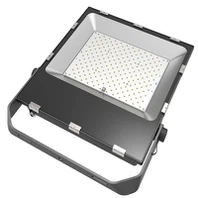
The heat dissipation problem of high-power LED floodlights limits the development of the LED lighting industry. If the heat dissipation problem cannot be solved, the temperature of the lamps will rise and the luminous efficiency will be reduced. For the current LED floodlight manufacturers, how to improve the heat dissipation performance of high-power LED floodlights has become an important way to save costs.
At present, the heat dissipation methods of LED floodlights mainly include natural convection heat dissipation, forced heat dissipation by installing fans, heat pipes and loop heat pipes, etc. The selection of LED floodlights also plays a key role in reducing temperature rise. Choosing LED lamp beads encapsulated by materials with high and consistent thermal conductivity can improve the internal thermal diffusivity. The metal substrate with high thermal conductivity and high heat dissipation is used as the wick board, so that the temperature distribution of the heat sink is uniform, so that the heat dissipation effect can be exerted more and better.
When the heat generated by the LED lamp at rated power exceeds its heat dissipation capacity, it also uses temperature control technology to limit the temperature rise while strengthening heat dissipation. When the temperature is high, the temperature control system starts to work, and the output of the driver is appropriately reduced to achieve the purpose of limiting and reducing the temperature rise; when the temperature is lowered, the original working state is restored.
Using the above method, once the temperature rise exceeds the set control temperature, the driver will reduce the output, and the luminous flux and power consumption of the lamp will be appropriately reduced without affecting the use, so as to avoid the LED flood light caused by overheating. and shortened service life.